
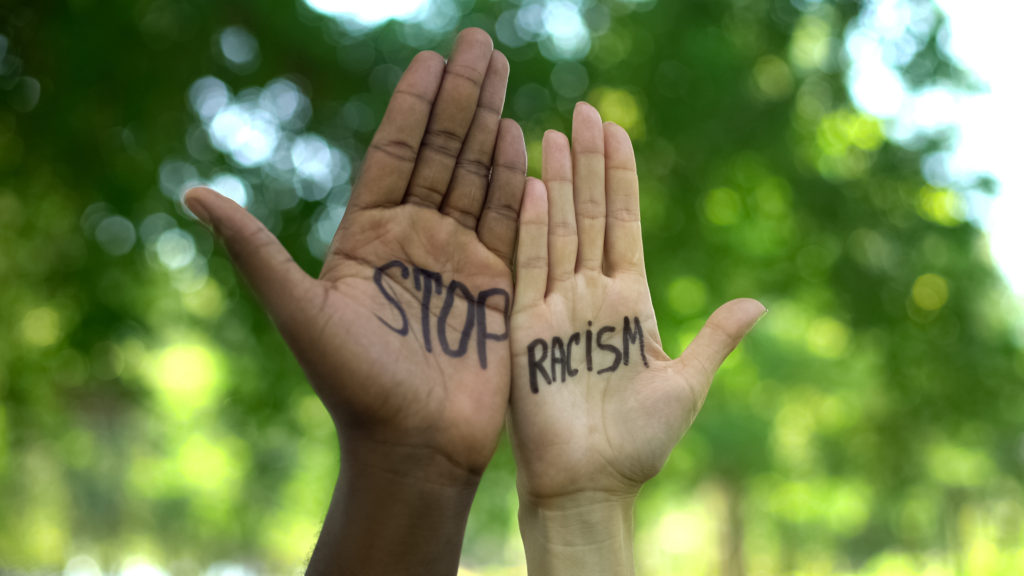
The killing of George Floyd and the national and world response to it has been life-changing for me. There were times when I had no words for my feelings because they were so complex. My world has been shaken. It’s been very stressful and I’ve been increasingly uncomfortable and that’s good. That means change is happening and action will follow.
I knew I needed to educate myself. I wanted a broader perspective of racial issues other than what the media was pushing out and the black experiences I’ve lived with my whole life.
I chose to start with learning about racism from a white perspective. How do white people see racism? Why do they think racism exists and continues? What do they think it will take to end it? Do they really want it to end? What if the history of blacks and whites in the US were reversed?
I didn’t know what I would learn, but I knew I had to get beyond my comfort zone to learn it.
I highly recommend “White Fragility” by Robin DiAngelo. Some will be offended by the title. Sorry, Nothing changes when people are comfortable. We need to challenge ourselves to learn about racism. Comfort and lack of knowledge enable racism to continue without interruption.
This book was a must-read for me. I listened to it on Audible during my everyday activities, so my learning would become a habit and not an exception. I have a much better understanding now of what racism is, why it continues to be an issue for this nation and sadly, why it will continue unless each person takes steps to interrupt it. I also learned that as long as we limit ourselves to seeing racism as good vs bad, individual vs collective, an incident vs a way of life, we will never really address the racism that has plagued this nation for centuries and generation after generation.
Here are a few excerpts from the book that I hope spurs curiosity, forces reflection and drives action:
- Racism is the norm, not the aberration. Feedback is key to our ability to recognize and repair our inevitable and often unaware collusion
- We bring our racial histories with us and contrary to the ideology of individualism, we represent our groups and those who have come before us. We see through racial lenses.
- Given the dominant conceptualization of racism as individual acts of cruelty, it follows that only terrible people who consciously don’t like people of color can enact racism. This makes it nearly impossible to engage in the necessary dialogue and self-reflection to lead to change.
- Because racism does not rely solely on individual actors, the racist system is reproduced automatically. To interrupt it, we need to recognize and challenge the norms, structures and institutions that keep it in place. But because they benefit us, racially inequitable relations are comfortable for most white people. Consequently, if whites want to interrupt this system, we have to get racially uncomfortable and be willing to examine the effects of our racial engagement.
- When white people ask me what to do about racism and white fragility, the first thing I ask is, “What has enabled you to be a full, educated, professional adult and not know what to do about racism?” It’s a sincere question. How have we managed not to know when information is all around us? When people of color have been telling us for years? If we take that question seriously and map out all the ways we have come to not know what to do, we will have our guide before us.
- Take the initiative to and find out on your own. To break with the conditioning of whiteness – the conditioning that makes us apathetic about racism and prevents us from developing the skills needed to interrupt it – white people need to find out for themselves what they can do. Break with the apathy of whiteness and demonstrate you care enough to put in the effort.
I am black and am putting in the effort to learn about racism to help myself and others intentionally change the racial future of our nation within the sphere of my influence. Everyone can do that. Unfortunately, not everyone will.
I am changing. I am growing. I know that my education will never end. Next up – “Biased” by Jennifer Eberhardt.
I challenge you to learn about experiences other than your own. They are all valid.
I also challenge you to get comfortable with being uncomfortable. We can stop racism. We can do this!